


All about becoming and being an Auburn student
This past year we all learned how to navigate the virtual college search process. Questions that popped up during a virtual year were less “Where do I park when I get to campus?” but more of reminding someone that they’re on mute, or in a lot of cases that they actually ARE NOT on mute, asking everyone “Can you see my screen?” and so many other things. While virtual was the best and safest way to connect with the vast majority of our applicants, we know that when it comes to recruitment, our favorite way to recruit is in person.
The Office of Undergraduate Admissions has slowly been getting excited for our Fall travel season. Each time a calendar was released with fair dates, the excitement continued to grow. New travel bags have been ordered, new recruitment material has been delivered, schedules have been planned, extra hand sanitizer and face masks have been packed, and hotels, rental cars and flights have been booked!
Normally, once September hits, our office is like a ghost town with all the admissions advisors out on the road. Their schedules are full of high school visits, student meetings, and college fairs. Unfortunately, we also realize that we’ve not made it to the other side of the COVID-19 pandemic. So, in some cases, we’ll continue to connect with you virtually and look forward to doing so!
Our hope this Fall season is to visit with you safely in-person when and where we’re allowed to. Whether that’s at your high school, at an area college fair, or when you visit Auburn’s campus, we look forward to connecting with you and sharing all things Auburn University! Make sure to reach out to your Auburn Admissions Advisor and see what opportunities are available to connect with them.

It’s hard to believe it’s August and we are getting ready for another incredible year at Auburn University! Move-in is happening all over campus and throughout the city of Auburn, and Sorority Recruitment has started and is keeping many of the incoming women at Auburn busy. The ever so random afternoon shower creeps in each day, and the smell of football season is on the horizon. A stroll across campus can seem quite the chore in the 100% humidity, but the sound of the Auburn University Marching Band puts a smile on one’s face knowing what is soon to come to Jordan-Hare stadium.
One of the most prominent events that takes place after move-in and through the first few weeks of classes is Welcome Week! Welcome Week marks the beginning of the 2021-2022 academic school year and is the University’s official welcome for all new and returning students to be back on campus this fall. Welcome Week, hosted from August 9-20, provides all students with a variety of ways to get involved, and make Auburn truly feel like a home away from home. Whether it be cornhole or Back to School BBQ on the Campus Green, first day of class photos on the Haley Concourse, or a free movie in the Auburn Arena, there are plenty of opportunities for free swag and best of all, free food! Welcome Week is great for freshmen because of the opportunity to get information about different academic, athletic, service, and religious organizations on campus. All of these groups can be found on AU Involve online. The Auburn Guides app is a must to find out information on everything happening in these jam-packed first two weeks at Auburn! Take the opportunity to put yourself out there, meet new friends, find groups that you want to be a part of and more!
The transition to being a student at Auburn University can certainly be an exciting and stressful time, but the memories that will be made cannot be matched! The freshman at Auburn are starting a new chapter of their lives here on the Plains and we are so excited to help them develop academically, socially, and personally. I encourage each student to meet someone new, go to class, try all the different places to eat on campus, especially The Edge – the newest dining facility, and really launch yourself into the best four years of your life!
War Eagle!
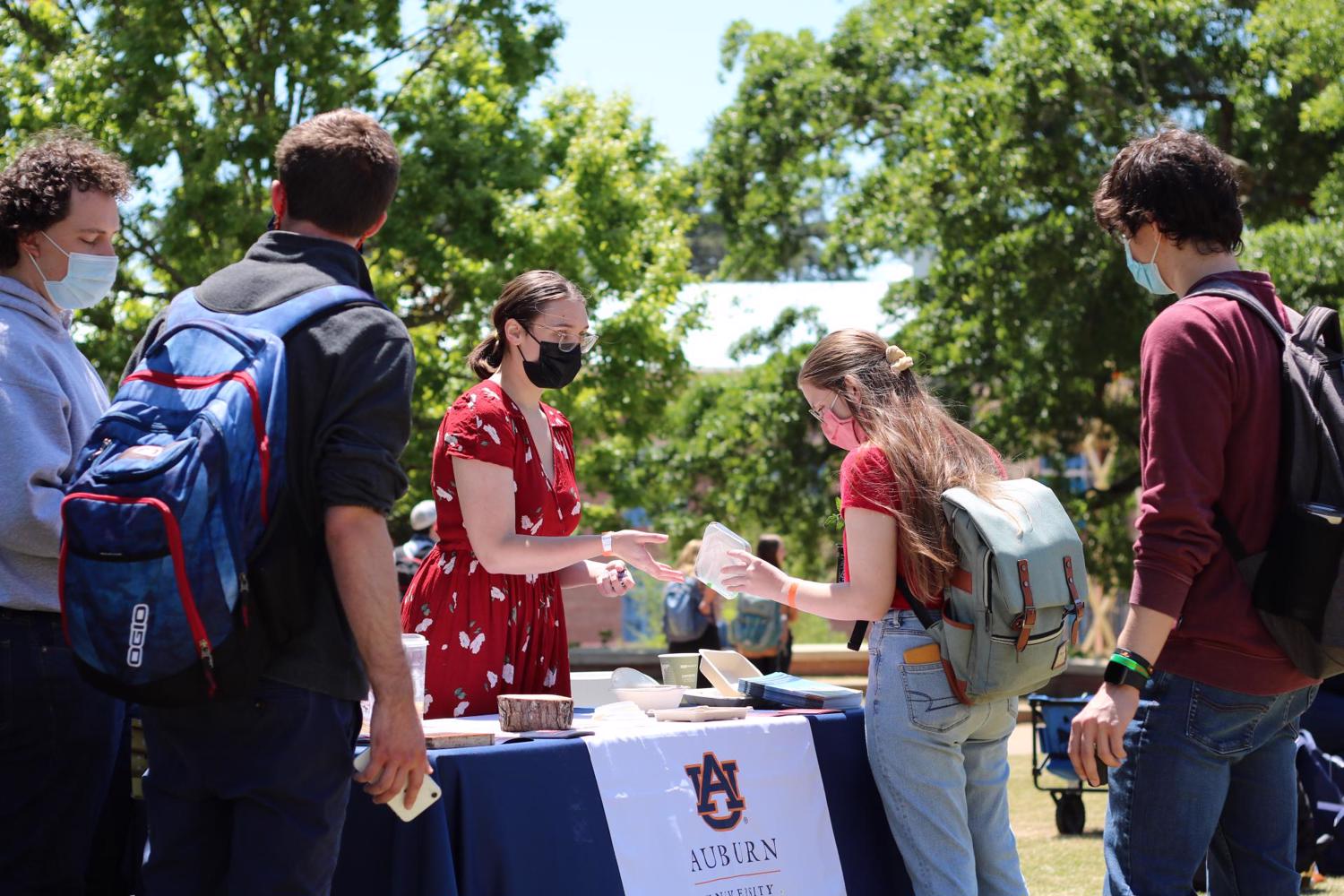
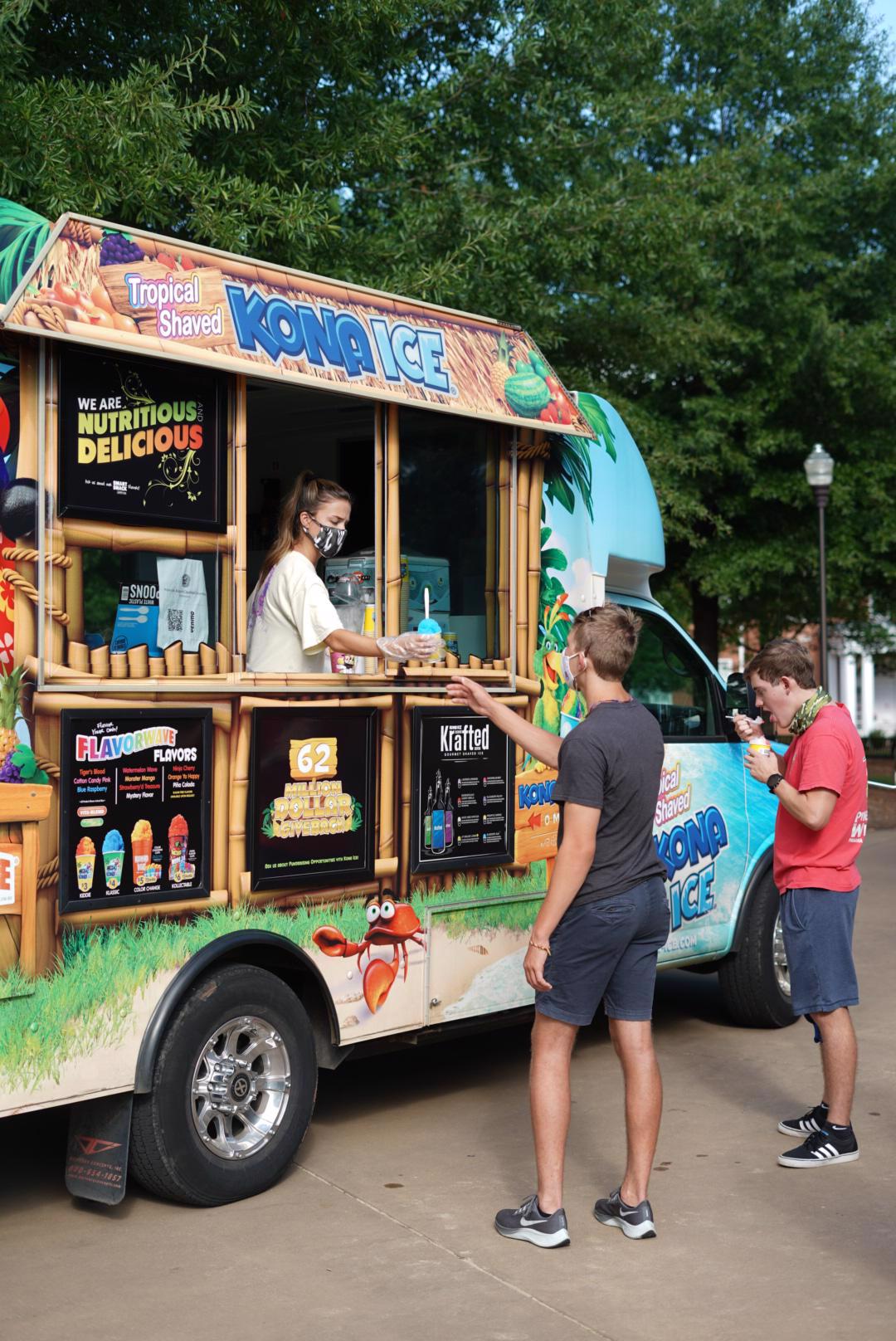
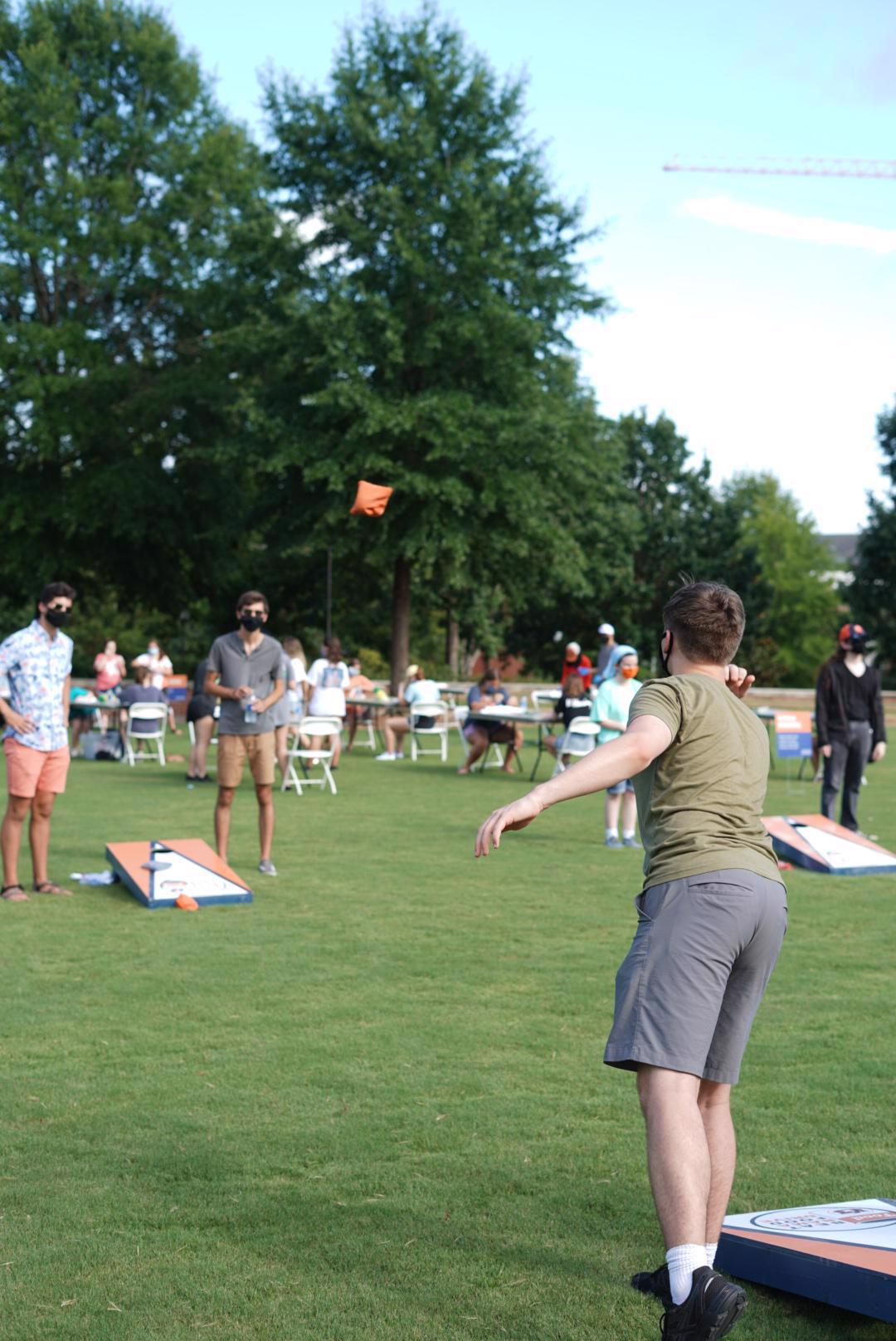
Photos from: https://auburn.campuslabs.com/engage/organization/upc/gallery/album/311014
Choosing a major can be a little bit overwhelming. You may find yourself thinking, where do I start? How do I know this is right for me? Why are there so. many. options???

If the idea of choosing a major is making you feel like Aubie- we’re here to help! At Auburn, we have 150+ majors housed in our 12 colleges and schools. So how do you decide what’s right for you? I’m sharing a few tips that I think will help guide you in your path to choosing a major.
No matter what you decide, your path is out there. You may just have to dig a little to find it. And don’t be afraid to ask for help! Here at Auburn University, we want to make sure you are not only leaving with a great education but that you are prepared for life. We are here to inspire, innovate, and transform you so that you can do the same for others.
Be sure to check out a full list of our majors to see what opportunities Auburn University can offer you!
By: Lenzy Borden

Toomer’s Corner is home to one of Auburn University’s most cherished traditions and one of Southern Living’s Top 100 Things to Do Before You Die. Let’s dive into a little history of this landmark. You will likely hear different forms of the story on campus visits and at Camp War Eagle, but this is how I like to tell it best:
Mr. Sheldon Toomer bought the drug store from his Stepfather after completing Pharmacy School at Auburn University (known then as Alabama Polytechnic Institute) in 1896. This drug store was the only business in town to own a telegraph, and when Auburn’s football team played away-games, they were the only ones around to get the current score.
As Auburn scored and Toomer’s received the updates, the employees would take the ticker tape from the telegraph and tape it to the windows. The more paper, the better Auburn was doing. Fans in the community would stop by, check the score, and go about their day. When they would post the final score that Auburn had won, the fans would rip the paper off of the windows and throw it in the oak trees at the corner of campus. This was the best way to let everyone know that our boys were bringing home another victory.
Eventually, ticker tape got to be expensive, so at some point we switched over to toilet paper, but the tradition is something we do for every victory we see. The picture below is from the 2010 National Championship. We take this pretty seriously, don’t you think?


Crossing the street back towards downtown, Toomer’s Drug Store is home to one of Southern Living’s Top 100 Things to Do Before You Die– try the lemonade. Toomer’s lemonade is a favorite of all who try it. You can go classic with the regular lemonade, or try one of their flavors. My favorite is the Strawberry-Lemonade for the real strawberries, and the frozen options are amazing. Ice cream, soda floats, Toomer’s T-shirts, and lemonade by the gallon can all be found at the heart of our downtown here in Auburn, Alabama.

The College of Architecture, Design and Construction, or as we call it the CADC, is a community of designers and thinkers, builders and makers, leaders and stewards. We have more than 100 faculty and staff teaching and supporting about 1,550 undergraduate students studying in six programs.
Our students learn to create, design, and build the world around us. Learn more about our programs from some of our faculty and students below:
Allie Pelafos — Architecture and Interior Architecture

Auburn’s Architecture program, founded in 1907, is the oldest Architecture program in the south and is consistently ranked among the top 15 Bachelor of Architecture programs in the country by DesignIntelligence. Allie Pelafos is a 5th year senior from Champaign, Illinois and she says she chose Auburn because of how many opportunities the program offered. “I instantly felt at home on campus. I was looking at the top ranked Architecture and Interior Design programs in the country. The Architecture/Interior Architecture concurrent degree gave me the opportunity to achieve both goals within 5 years. Learning the ins and outs of a building while creating so many connections so early on in my career was a chance I could not pass up.”
As a third year student Allie was selected for our degree program in Interior Architecture, which is offered concurrently with the Bachelor of Architecture degree. She also traveled to Rome through the Architecture program’s study abroad opportunities. “Being able to immerse yourself as a student allows you to learn so much about yourself and others that you can apply to projects long term.”
Allie is the 2021-2022 CADC Ambassador President. “I recommend prospective students who are looking at Architecture school to also consider the university as a whole. You want to pick a place that offers enough opportunities where your education will flourish through your individual interests and goals.”
Upon graduation in May Allie hopes to serve others through architecture. “I want to use my degrees to better the lives of others. Maybe healthcare design? I am keeping options open and looking forward to thesis year!”
Logan Bozeman — Building Science

Our Bachelor of Science in Building Construction degree focuses on construction management and teaches students how to execute, plan and manage construction projects from beginning to end. McWhorter School of Building Science alumni become estimators, project managers, virtual design construction managers and superintendents at construction companies all over the world. Logan Bozeman, a senior from Wetumpka, Alabama, is soon to be one of those alumni!
Logan will graduate from Auburn Building Science in December and is looking forward to his transition into industry. “One of the biggest things I am looking forward to is getting to work on a project from the ground up. I can’t wait to see something come together and look back on it for years and say, ‘I was a part of building that.’ ”
During his time in the program Logan has been involved in student organizations like Associated General Contractors (AGC) Student Chapter and is a CADC Ambassador. He has also been a member of three regional and national competition teams. “I enjoy competition teams because they give you real world experience on what you will be doing after college: things that range from estimating to making a schedule to running a company.”
Upon graduation Logan hopes to move into a pre-construction or project management role with a general contracting company. When asked why he chose Auburn’s Building Science program Logan said, “I grew up playing with Legos and games like Minecraft and thought that would lead to architecture, but I realized the hands-on component that existed in Building Science was my true passion.”
Katie Henry — Environmental Design
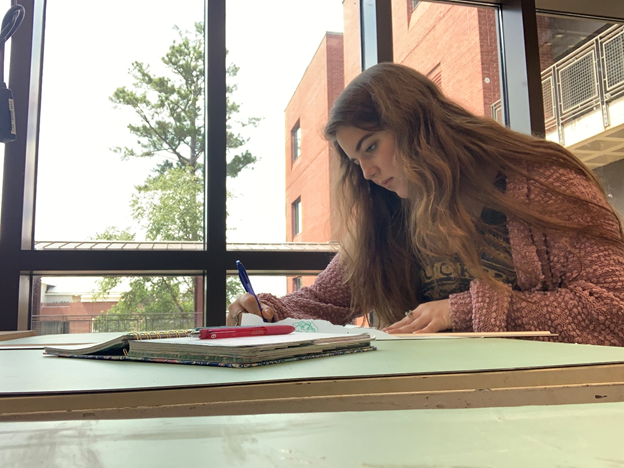
Environmental Design is the broadest, most flexible degree offered in the CADC. Students in the program learn core knowledge of all design and construction fields as well as business practices related to human-designed environments. Sustainability is woven throughout the curriculum, and together these subjects lead our students to become extremely versatile and prepared for anything the industry could throw at them. Katie Henry, a senior from Hartselle, Alabama, is finishing her final studio this semester. “I chose to major in Environmental Design because I am the type of person who likes to know a lot about everything. Environmental Design allows me to scratch every itch when it comes to my desire for knowledge. We specialize in systematic thinking and systematic design. I believe everything is connected and my degree allows me to find those connections.”
It is a common theme among Environmental Design students to want to positively impact the world with their creations. Katie is no exception. “I hope in 10-15 years I can be a part of starting a non-profit organization that serves orphans in third world countries. So much of what we learn in Environmental Design focuses on understanding sustainable design. There are many third world countries who do not use their resources to the fullest extent. I hope to work with world leaders to improve the designs of orphanages throughout the world through my non-profit. “
As President of the Environmental Design Student Organization, Katie participated in the Environmental Protection Agency (EPA) Rainwater Challenge. “Competitions are not for the faint of heart! Patience, team collaboration, managing others, typography, time management and most of all leadership skills. I recommend everyone to take the opportunity, if given, to manage a design team because it allows you to become a better designer.”
Kaiyah King — Graphic Design

Graphic Designers use words, pictures, typefaces and graphics to convey messages, often to large groups of people. From logo and stationery design to interactive media like website design and motion graphics, visual communication is their specialty.
Kaiyah King, a senior from Energy, Illinois, holds two on-campus jobs, served as the VP of Marketing and Communications for the Black Student Union (BSU) for the past two years, is the on the Board of Directors for the Student Alumni Association and is a CADC Ambassador. When asked about how she manages all her involvement and a design major she says, “I am consistently working on my time management skills. You never achieve perfect time management. It requires constant attention. If you love what you are doing and what you are involved in, you make time for it all.”
As a CADC Ambassador Kaiyah gives tours to prospective students and her favorite piece of advice to share is about exploring options for student involvement. “Experiment freshmen year joining different organizations and networking throughout campus. There is a chance what you are involved with in freshmen year will be different than senior year. It’s okay to allow your interests to evolve as you grow and mature. Every experience or group helps mold who you become.”
Recognized as one of Graphic Design USA’s top programs, Auburn Graphic Design pushes students to become the best designers they can be. Kaiyah believes that the rigor of the program is why our alumni are successful upon graduation. “During one of my visits to campus, I saw the Senior Design Show. It inspired me because I knew if I graduated as an Auburn Graphic Designer, I would leave with the education that taught these students to do this incredible work. Now that I am a rising senior, I realize there are so many different career pathways in Graphic Design. The curriculum has taught me a little bit of everything. I look forward to using what I have learned in industry.”
Roshani Trivedi — Industrial Design

Consistently ranked among the top ten Industrial Design programs in the country, Auburn’s Industrial Design program is known for its unique curriculum in product design and product innovation. Roshani Trivedi, a senior from Knoxville, Tennessee, chose to major in Industrial Design because it combined artistic creation with helping others. “I knew I wanted art as a part of my career, but a fine art degree would have lacked a technical, functional aspect which I was also seeking. I wanted to help people with my work.”
When it came to choosing a school, Roshani looked all over. Finding a program that had the perfect combination of art and engineering was no small feat, but Auburn fit that search perfectly. Roshani has worked on a number of different projects in her studios. In just the past year she has designed packaging with Pratt Industries; worked with the Marine Discovery Center in New Smyrna Beach, Florida on master planning; designed and fabricated a chess set in collaboration with students in Ireland; designed, fabricated and installed a bike rack for Innovation Portal in Mobile, Alabama; and most recently designed guitar mounts and completed the exhibit design for the Fret Haus Senior Design Thesis Exhibit at the Alabama Contemporary Arts Center in Mobile, Alabama. Roshani says the Fret Haus Guitar Exhibit Design was her favorite. “I really enjoyed starting with the big picture concept and then working through it until seeing it on opening night. It was very fulfilling to see the senior students show off their work to friends and family through the exhibit we created. Exhibit design is a subtle aspect of design as people are there to see the work in the exhibit not how you set it up, but it is such a crucial aspect of the exhibit.”
This summer Roshani served as a student assistant for the Industrial Design summer camp at the futures studio in Mobile, Alabama. When asked about her favorite part of sharing the Industrial Design program with the campers she said, “I love getting to know people. Getting to introduce the students to something that I love so much was an honor. I personally struggled as a high school student trying to figure out what I wanted to do. Being able to help these students start their journey to find their passion was amazing.”
Professor David Hill — Landscape Architecture

We are excited to launch our Bachelor of Landscape Architecture program in the fall 2021 semester. Landscape Architecture students will learn to imagine, design and build the 21st century’s landscapes during their time with us. Our program will teach students how to engage many of the most pressing issues the world faces today through intentional design of outdoor spaces.
Program Chair David Hill says, “The discipline of landscape architecture continues to expand in its ability to make meaningful, positive impact in people’s lives and we look forward to continuing to explore how our students can engage the dynamic relationship between society and the land.”
With so many wonderful things going on in the CADC, we know the fall 2021 semester will be one of our best yet. We look forward to starting another year of creating, designing and building.
In 1964, Harold A. Franklin became the first African American Student at Auburn University. Unfortunately, he left the University in 1965 without the opportunity to defend his thesis. Despite not earning his degree at the time that he had hoped, Dr. Franklin returned to the University on numerous occasions for speaking engagements and notable recognitions. In 2015, he attended a ceremony for the unveiling of a marker in his honor. He received an honorary doctorate from Auburn in 2001 and in February of 2020, he successfully defended his thesis and was granted approval for the master’s degree in history that he initially pursued in 1964.


Since denying Dr. Franklin the opportunity to initially defend his thesis, the University has made great strides to ensure that African Americans are provided with opportunities to succeed, have representation on campus, and are celebrated for their accomplishments.
During a recent campus visit, you may have noticed the Harold D. Melton Student Center, Bessie Mae Holloway Hall, and Josetta Brittain Matthews Hall.
The Harold D. Melton Student Center was named in 2020 after Chief Justice Harold D. Melton of the Georgia Supreme Court, who became the first African American President of the Student Government Association (SGA). Chief Justice Melton studied international business and Spanish and earned a Bachelor of Science degree from Auburn in 1988.

The naming of the student center was the first time a building on campus was named after an African American, but it was not the last. Earlier this year, the University named two residence halls after two prominent members of the Auburn family. The former Tiger Hall was renamed the Bessie Mae Holloway Hall and the former Eagle Hall was renamed the Josetta Brittain Matthews Hall.
Dr. Bessie Mae Holloway, who earned a doctorate degree in education from Auburn, was the university’s first African American Board of Trustees member and she represented the 1st Congressional District from 1985-2000. She was a lifelong resident of Prichard, Alabama before passing in 2019 and worked as an educator in the Mobile County Public School System for over 25 years.

Dr. Josetta Brittain Matthews is the University’s first African American graduate. She earned a master’s degree in education in 1966 and, in 1972, she became Auburn’s first African American faculty member when she joined the College of Liberal Arts as a French and history instructor. She continued her studies at Auburn and earned a doctorate degree in 1975.

There are countless examples of Black History displayed throughout the fabric of the university and these are just a few examples. Additional stories about African American graduates of Auburn can be found on the Black Alumni Council webpage.
As you embark upon your Auburn journey, you will notice that Auburn University is a place of inclusion. You have a voice, and your voice will be heard. As a student at Auburn, you will be encouraged to be your authentic self and make changes that impact the University and the universe.
Alright, students. I think it’s important to preface this post with a very clear statement of my love for all of you. I love that my job is centered around working with you as you aim to further your education. I love that so many of you similarly fall in love with my hometown of Auburn, AL – The Loveliest Village on the Plains. With all of that in mind, are we all on the same page about my feelings for all of you? Great! Because I also must admit that I kinda love summers in Auburn when there are just fewer of you in town. I always have. I always will… There’s less traffic, minimal wait times at restaurants, and a generally slower pace that makes for a nice reprieve from the energetic hustle-and-bustle of the academic year.
While I’ve never been the biggest fan of the heat and the humidity of Alabama summers, there’s something special about a season that comes with more sunlight to savor the experiences that accompany the consistent smell of freshly mowed grass and the sounds of cicadas and crickets chirping. This post won’t be an exhaustive list of all of the special things that take place during Auburn summers, but these are some of my favorites – coming from a food-loving, music-loving, and small-town charm-loving Auburn native.
With the few blocks that compromise Downtown Auburn, there are several incredible restaurants. Several have outdoor seating, which make for my favorite dinner environment in the summer. Be sure to check out a former blog post by fellow admissions advisor, Jan. Jan prides herself on knowing the perfect restaurant – type of food, price point, and atmosphere for any meal, so you can trust her recommendations for the Best Food in Town! I would also encourage all of you to follow The Auburn Downtown Merchants Association’s Instagram: @downtownauburn. This is a great way to keep up with the comings and goings in downtown. They even have a highlight for events that are taking place during that current season. A couple of my favorites take place in the summer!
For example, SummerNight Downtown Art Walk will be taking place on June 11th this year. A couple of streets will be shut down to thru-traffic and downtown becomes even more walking friendly for folks to enjoy (and even purchase) the talents of many of our local artists.
Cheers on the Corner is another favorite event of mine that will be taking place on July 30th this year. This is a similar set up – streets are closed to thru-traffic and there will be over 20 stops in the downtown area where attendees can sample a small bite to eat from one of our many local restaurants.
We have several parks in town that are worth exploring during the summer. Be sure to check out a former blogpost from my colleague, Rebecca. She describes many of Auburn’s Most Loved Parks in greater detail along with several pictures!
But for a brief synopsis – If you want…
… to hike, mountain bike, or enjoy water in multiple forms (lake, waterfall, creek) – check out Chewacla State Park.
… to take a peaceful, meditative walk – check out Town Creek Park. This is also where one of our local farmers markets, City Market, takes place every Saturday from late-May to late-August.
… to walk/run, visit the dog park, or enjoy various festivals – check out Kiesel Park.
I also highly encourage you to explore our local surroundings like Downtown Opelika and the even smaller town of Waverly, Alabama. Clayton Ann, a fellow admissions advisor, recently wrote about several must-sees in Downtown Opelika. Opelika is a quick drive from Auburn University’s campus and is home to several blocks of restaurants, coffee shops, and music venues. It’s also worth following @downtownopelika on Instagram to keep up with events. One of my favorite bands, St. Paul and the Broken Bones, was featured at a local music festival that took place there just a few years ago. The Auburn/Opelika area is also home to several incredibly talented local musicians so you’re never going to be far away from musical entertainment. Another top music venue from local and visiting musicians alike is the Standard Deluxe in Waverly, AL. Just a short drive up Highway 280, this venue is home to a bi-annual “280 Boogie” as well as a favorite of musical acts throughout the summer as well.
Auburn is also centrally located in the southeast so you’re only a couple of hours away from bigger cities like Birmingham and Atlanta. And depending on the direction you drive, you’re only 3-4 hours away from the beaches of Alabama and the Florida panhandle or the southern portion of the Appalachian Mountains.

I’ll wrap up this post by shamelessly spamming you with a picture of my part German Shepherd, part Pitt Bull, part Tasmanian Devil of a dog, Maddox. Let it serve as proof that a sunny day in Auburn will put a smile on anyone’s face. And if you want to experience everything that this town and the surrounding areas have to offer this summer, schedule a visit! We’ll be offering campus tours starting Monday, June 7th through the end of July. At the time of this posting we’re at capacity for most of our tours in June, but I highly encourage you to check our tour registration form for our availability.
The transition from high school to college can certainly be an exciting time for high school seniors, but it can also bring times of stress, confusion, and anxiety as one prepares to move away from home and set out on their new adventure towards independence. Auburn University and the First Year Experience Office has, for years, offered a first-class orientation program that will not only prepare incoming freshmen for four successful years, but has also designed a program for parents and guardians so that they know what to expect as their student embarks on this new journey.
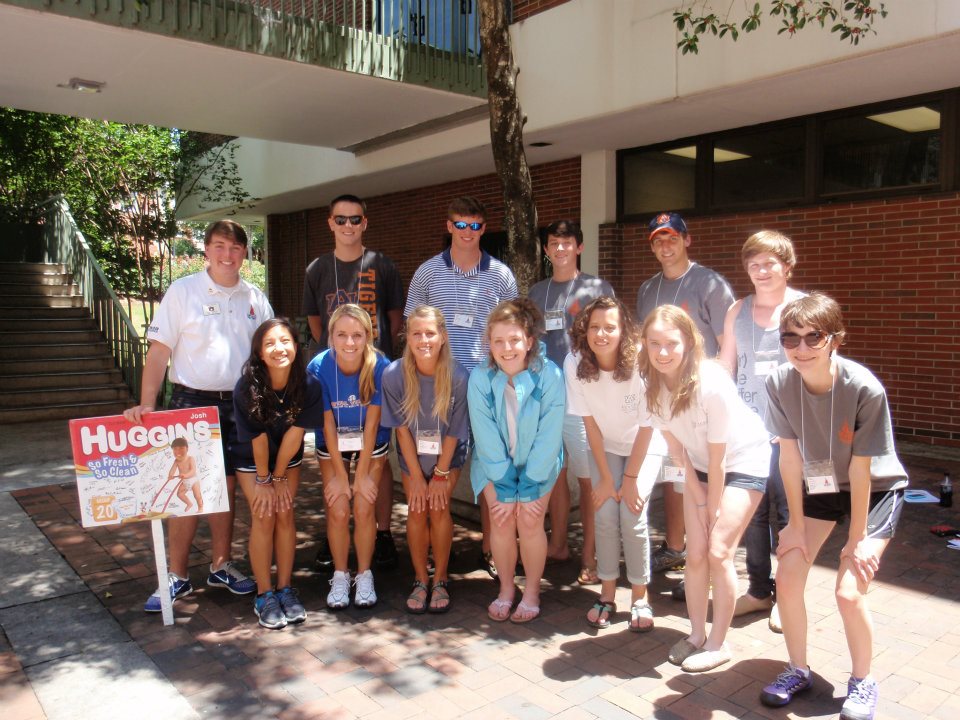
Since 1995, Camp War Eagle (CWE) has been welcoming incoming freshmen to Auburn’s campus through small group interactions, skits, pep rallies, and more! Since the global pandemic started in March of 2020, CWE has had to make changes to the 10 regularly scheduled two-day summer sessions to accommodate all incoming students and family members while keeping their health as a top priority. This coming summer, CWE will host 14 one-day in-person sessions and 3 virtual sessions for those still uncomfortable with traveling and coming to campus.

During my time as a student at Auburn University, I had the opportunity to work as a Camp War Eagle Counselor and Head Counselor. It was honestly one of the most rewarding experiences of my time as a student and what led me to my career path in higher education. The connections I was able to make with the incoming students in my group led me to my desire of helping the transitioning student population on a full-time basis, and I have no doubt any student can have an incredible experience at CWE as they are prepared for the best four years of their lives.
With the many changes to CWE for this summer, there will be some steps that students need to take to be prepared for their CWE session. The pre-enrollment modules became available on May 3rd and include the following: Information about your college and major, basic information about Auburn University, and a series of assessments called “Connecting the Creed”. The first two sessions listed last approximately 45 minutes, and the final module will take about 90 minutes to complete.

Academic Advising is one of the most important aspects of Camp War Eagle! Incoming freshman will have the opportunity to meet with the college or school of their intended major and will be allowed to register for Fall 2021 courses on the date that coincides with the CWE Session attended. All of this and additional information can be found at fye.auburn.edu/cwe/students.
I encourage all students to come into CWE with an open mind and the willingness to meet new people! While the day can be overwhelming with the amount of information you receive, the Camp War Eagle staff has strategically designed all of the small group sessions with a purpose so that all students can be best prepared for anything they may face during their time as an Auburn student.

All of this to be said, Camp War Eagle is an incredible experience for all of those involved! I encourage all parents and guardians to be involved in this process as it is a big change for everyone in the family. CWE is the beginning of an incredible journey that the incoming freshmen are about to embark on and if I could go back to 2009, I would do it in a heartbeat. Students, savor every single moment you have in college because the time will fly by and before you know it, you’ll be interviewing for graduate school or your dream job!
Throw out everything you think you know about agriculture.
Because the nearly 20 different majors in the College of Agriculture at Auburn University could open doors to careers you cannot even imagine.
As agricultural scientists, our focus is on the food, fuel, water and natural resources that keep our world moving. We are working to make food safer, the environment cleaner and communities healthier. As one of the founding colleges of Auburn University, we tackle these goals through innovative research, academic rigor and outreach programs spanning around the world.
This is the work that makes the world work. Learn a little more about five of the majors our students are in below.
Johnathan Hampton – Horticulture
Does Johnathan Hampton look familiar? This rising senior horticulture major represents the College of Agriculture as an Ag Ambassador and is one reason why so many prospective students immediately feel welcome at the school. He’s passionate about landscape design and presenting a fuller understanding of what agriculture is.
In his pre-landscape architecture program, Hampton is gaining technical skills from across the discipline, including construction and soil science.
“One of the biggest things I enjoy is plant ID,” he said. “I’ve already taken one ID course called Small Trees, Shrubs and Vines. Having the knowledge of some of the plants already, I absolutely loved it. The course helps you connect the dots and realize, ‘Oh, I finally understand what that is.’”
Hampton chose to attend Auburn after touring a few schools with horticulture programs.
“The atmosphere and ambience of the town and the college really stuck out to me,” he said. “The College of Agriculture is one of the smaller colleges within Auburn and has more of a family feel. It seems like everyone knows and looks out for each other and is happy to be there. And it really shows how students are treated and invited in.”
Hampton encourages incoming students to get involved in clubs and activities in their college. In addition to Ag Ambassadors, he is a member of the Auburn University Landscape and Nursery Association. He said that traveling with the club to Mobile and attending the Gulf States Horticultural Exposition was a highlight of his college career so far.
“Basically, it’s an entire congregation of agriculture industry professionals,” he said. “You have masonry experts, plant wholesalers, people who specialize in annuals or perennials or breeding new cultivars. You also have leaders of horticulture organizations from around the country. So it was a huge deal to go and meet people and make connections.”
Kylie Weis – Applied Biotechnology
Weis has no doubt in her mind about why she chose Applied Biotechnology as her major at Auburn University: She wants to use the tools of nature to make nature better for mankind.
Biotechnologists use genetically modified organisms — commonly known as GMOs — to better utilize currently available resources. GMOs can help farmers by developing plants that are resistant to pests and pathogens or by engineering plants that are more tolerant to drought, for example.
These biotechnological advancements allow farmers to grow the amount of food needed to feed the world’s growing population, which serves as an inspiration to young biotechnologists like Weis.
“One of my biggest inspirations is a project called Golden Rice,” Weis said. “A lot of the world’s population survives on rice, and rice is not that nutritional, so people were beginning to suffer from vitamin A deficiency. But applied biotechnologists were able to modify rice to produce beta-carotene genetically.”
Beta-carotene is an essential nutrient that white rice lacks, which is converted into vitamin A in the body. The Golden Rice project is a symbol of an idea: that genetically engineered crops can help improve the lives of the poor.
Weis loves genetics and has been interested in a few different subject areas within the field since starting her major.
“If you want to go into applied biotechnology, try it even if you are just curious,” she said. “There are a lot of things that could catch your interest once you start getting into applied biotechnology.”
Adam Lenhard – Biological & Agricultural Technology Management

Biological and Agricultural Technology Management is a bit of a mouthful.
So it’s no wonder students in the program, like rising senior Adam Lenhard, call it BATMan.
Lenhard is one of a handful of students currently working in the newest piece of agricultural technology on Auburn’s campus: two vertical farms operating inside shipping containers.
“I have previously worked in an indoor, vertical hydroponic system in Huntsville, Alabama, and I have been itching to get back into that type of growing system,” Lenhard said. “These freights are providing me and other students on campus with the amazingly unique opportunity to work directly with some of the most advanced type of farming technology available today.”
The Freight Farms work by setting every environmental control — air, light, water and space — for optimal plant growth, all of which can be controlled from an app on your phone. With this technology, it is possible to continually grow food 365 days a year.
The food in the freights on Auburn’s campus will be harvested and served right back to students through Auburn’s Dining Services facilities.
Lenhard said he plans to continue to work with these types of indoor, LED hydroponic systems after graduation.
“I enjoy how these systems allow the user to completely manipulate all factors concerning plant growth and development through the proper mixture of nutrients, light and CO2,” he said. “I also believe that the high amount of water conservation that hydroponics provides can drastically help urban areas reduce their water usage while also providing consumers with fresh veggies harvested only a few miles from their apartments or homes.”
His goal after college is to normalize urban hydroponic farming; provide large, consistent yields of fresh vegetables; and provide food to those in need who do not have as much access to fresh produce.
“Having these freights directly on campus is providing me and my fellow classmates with a new and interesting learning experience that is advancing our hydroponic knowledge through hands-on experience,” he said. “I am absolutely stoked to have them here.”
Justin McCaghren – Crop, Soil & Environmental Sciences
Justin McCaghren grew up around agriculture.
That upbringing and his love of working outdoors led him to choose the major Crop, Soil and Environmental Sciences Production.
“I enjoy working with my hands,” he said. “And most importantly, I love hard work.”
McCaghren believes strongly in the idea that if you eat and you wear clothes, agriculture affects you. And he feels passionately that feeding and clothing the world in a way that helps to sustain the earth “is the greatest contribution or service that a person can give to society.”
The recent graduate from the College of Agriculture is continuing his education at Auburn to pursue a master’s in crop protection.
“I’m mainly focusing on weed science and crop injury,” he said. “Upon completion of a master’s, I plan to work for a chemical company until eventually I can start my own row crop and cattle farm.”
The biggest encouragement he can give to an incoming student would be to consider pursuing something they truly enjoy and that they will look forward to getting up each morning and doing.
“In the world of agriculture, there are unlimited opportunities and careers to choose from,” he said. “Specifically for my major, I would encourage an incoming student to think about whether they would like to pursue a career in helping to sustain life and the environment. If a student enjoys being hands on, working outside, and has a calling to serve their community and the world, then Crop, Soil and Environmental Sciences Production is definitely a major they should consider. After all, it is our work that makes the world work.”
Gracie Sims – Poultry Science
Gracie Sims credits her mother for getting her into poultry science.
“I was adamant about doing something in education until my mother took a job as an ag teacher while I was a freshman in high school,” she said.
Her mother was also an advisor for FFA, a student-led organization based in agriculture. So she signed her daughter up for a poultry judging competition.
“After getting over the initial opinion that this was a bizarre thing to compete in, I discovered I was good at it and competed for three years until I graduated high school,” Sims said. “Through this, I discovered Auburn has an excellent poultry department and became part of it in fall 2017.”
Sims graduated from the department this month and is starting in Auburn’s College of Veterinary Medicine this fall. After graduating from vet school, she hopes to return to the poultry industry as a poultry veterinarian.
“I am aware poultry science is not the first major that comes to mind when thinking about college majors,” she said. “But during my time as a poultry science student, I have learned the ins and outs of a multibillion-dollar industry that aims to produce poultry meat and eggs for the growing population.”
Coupling this with what she calls “the absolute best undergrad experience,” Sims says to look no further if you wish to be a part of “something bigger.”
“Providing food is the ultimate basic need,” she said. “And in the words of the College of Agriculture, ‘this is the work that makes the world work.’”


